







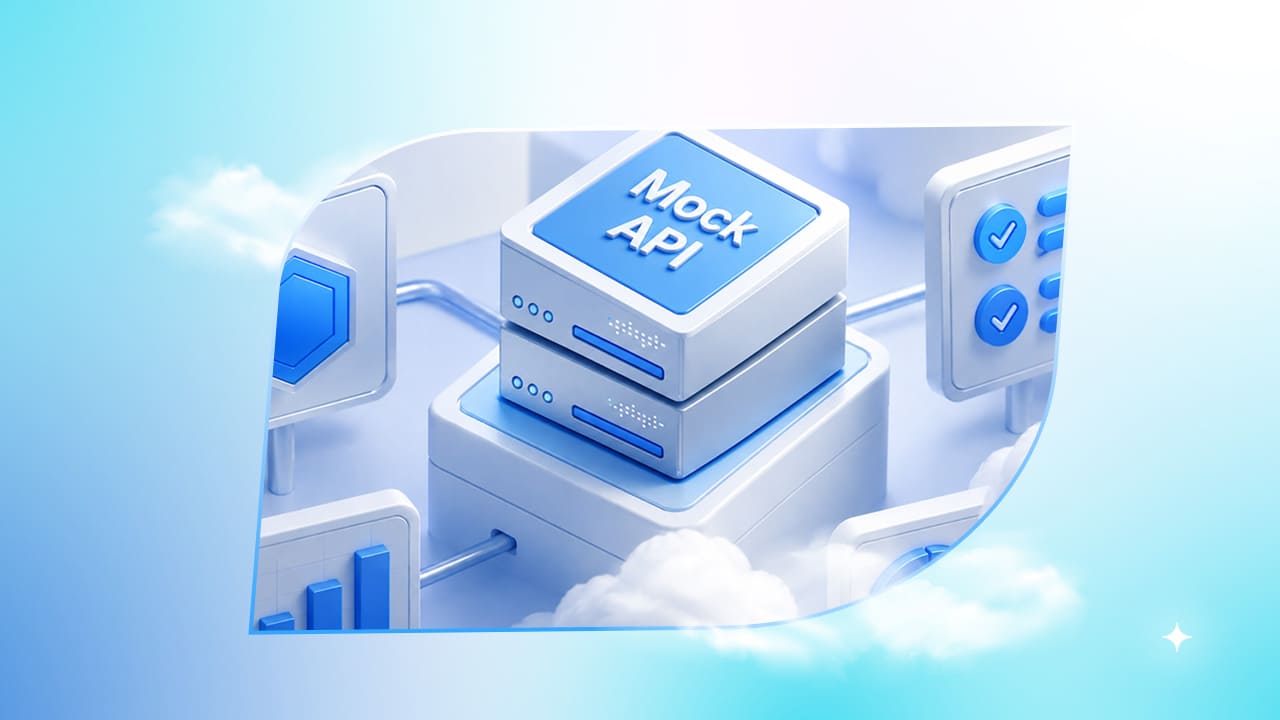
API Mocking at Enterprise Scale: A Governance Framework for Multi-Squad QA Teams (2026)

API mocking is the foundational practice of simulating upstream service behaviors, contract structures, and performance profiles to decouple test automation from live environments. Yet, while localized mock stubs unblock isolated developers, scaling API mocking at enterprise scale across multi-squad microservice architectures introduces dangerous operational vectors: silent mock drift, duplicated configurations, and cascading pipeline failures when third-party gateways or internal backend dependencies go dark.
When a critical upstream payment gateway or inventory service undergoes unscheduled maintenance, staging environments gridlock, sprint velocity stalls, and test suites yield brittle false positives. Resolving this bottleneck is fundamentally a system governance problem, not a tooling deficit.
A robust operational matrix for enterprise QA leaders shifts from ad-hoc service virtualization to an engineering model anchored by squad-level mock ownership, centralized registries, and automated schema drift detection, the critical architectural layers traditional testing guides omit.
- What is API Mocking? Core Concepts Every QA Team Should Know
- Four Ways API Mocking Directly Speeds Up Test Automation
- Building an API Mocking Strategy: From Dependency Mapping to Execution
- Integrating API Mocks Into Your CI/CD Pipeline: A Step-by-Step Approach
- API Mocking Governance Patterns and Best Practices
- Governing API Mocks at Enterprise Scale: A Multi-Squad Framework
- From Blocked Pipelines to CI-Stage Releases: An E-Commerce Mocking Walkthrough
- API Mocking Best Practices: A Governance-Ready Checklist
- API Mocking Governance Maturity Model
- Conclusion
What is API Mocking? Core Concepts Every QA Team Should Know
API mocking is the practice of replicating API behavior and responses so teams can test applications without depending on live services. QAs can test apps in a predictable and controlled setting by using a mock API, which offers predetermined responses that mimic actual-world scenarios instead of calling a live service.
These simulated services serve as stand-ins for actual dependencies in API mocking in test automation, allowing teams to validate app logic without having to wait for backend readiness or deal with environment-centric issues.
Types of API Mocking
Teams can pick the best strategy for their testing needs by knowing the various techniques and types of API mocking:
| Type | What It Does | Best For |
|---|---|---|
| Stub | Returns hardcoded responses to specific requests | Simple, lightweight tests |
| Mock | Validates interactions, call frequency, arguments, order, alongside responses | Behavior-driven testing |
| Virtual Service | Simulates dynamic responses, errors, and performance characteristics | Microservices and enterprise environments |
| Mock Contract | Enforces agreed-upon request/response structures via OpenAPI or consumer-driven contracts | API contract validation |
API Mocking in Test Automation Pipelines
API mocking in test automation is essential to maintaining pipelines’ speed and reliability in modern operations. Teams can run automated tests earlier and more frequently by eliminating dependency on shared or unreliable settings. Mock APIs minimize flaky test failures, enable parallel development and testing, and offer consistent test data across environments.
At the microservices layer, where service boundaries multiply and team ownership fragments, consistency is not a convenience; it is the basic requirement for any CI/CD pipeline that can be trusted at release time.
SUGGESTED READ - What are Mocking and Stubbing in API Testing?
Four Ways API Mocking Directly Speeds Up Test Automation
API dependencies are the most common bottleneck in automated test pipelines. API mocking in test automation eliminates these blockers by substituting live services with a mock API, enabling expert teams to test earlier, more rapidly, and with greater consistency.
Controlled and Expectable Responses
QA teams can accurately control API responses, such as corrupted data, timeouts, or certain error codes, on demand by using API mocking in test automation. Because of this, it is much simpler to verify how apps function under exceptional circumstances that are challenging or risky to reproduce with actual services.
Parallel Testing via Service Decoupling
No longer required to wait for the completion, deployment, or stability of downstream or upstream APIs. Teams can run tests concurrently with development by utilizing a mock API, allowing earlier validation and decreasing testing cycle idle time.
Decreased Test Flakiness
By offering consistent, repeatable responses, mock APIs eliminate inconsistent test data from live APIs, unstable environments, and network issues. Experts spend less time maintaining brittle tests, test suites become more consistent, and failures are simpler to identify.
Quick Feedback & Integration of CI/CD
Removing external dependencies from CI pipelines means teams can incorporate tests earlier, get faster feedback on code changes, and catch faults before they affect later delivery phases.
Building an API Mocking Strategy: From Dependency Mapping to Execution
The first step in a successful API-mimicking strategy starts with planning, not tools. The best API mocking strategy for incorporating mocks into the test automation framework is described here.
Step 1: Mapping the System Dependency Graph to Identify Vulnerability Points
Before writing mock definitions, teams must map out the system under test’s complete dependency architecture. Document all internal microservices and external third-party integrations, highlighting dependencies characterized by frequent downtime, rate-limiting, or high transaction costs.
Step 2: Isolating Complex Workflows Using Stateful vs. Stateless Mock Architectures
An effective mock setup must mirror real-world system mechanics without introducing excessive code maintenance. Teams must deliberately match mock complexity to the target business flow:
- Stateless Mocks: Return a static, unchanging response payload for every matching request. This configuration is ideal for validating isolated REST endpoints, checking query parameters, or asserting failure modes.
- Stateful Mocks: Track prior execution requests and dynamically alter internal state history across a multi-step transaction. This is necessary for verifying end-to-end e-commerce checkouts, where a payment step requires an exact transaction ID generated during a previous order-creation call.
Step 3. When to Mock vs. When to Integrate
Mocking every system component introduces artificial coverage traps. Enterprise teams should isolate specific system tiers based on clear risk matrices:
| Implement Mocking When: | Utilize Real Service Integration When: |
|---|---|
| Downstream dependencies are managed by third parties outside your deployment control. | Running late-stage end-to-end integration flows to validate the complete wire path. |
| Third-party API usage fees or rate-limiting makes frequent automated testing expensive. | Executing specialized security, OAuth compliance, or real authentication handshakes. |
| The upstream service is actively changing or structurally unstable in lower environments. | Running User Acceptance Testing (UAT) where strict production fidelity is legally mandated. |
| Testing fault tolerance, simulated latency drop-offs, and edge failure profiles. | Validating overall performance under true network topography and infrastructure loads. |
Step 4. Include API Mocking with Automation Suites
Mock APIs should plug directly into your automation layers:
- API tests validate consumer logic independently.
- UI tests stabilize frontend automation.
- End-to-end flows apply mocks only for non-critical dependencies.
- Contract tests verify mocks stay aligned with real services.
This hybrid approach preserves speed without sacrificing coverage.
Integrating API Mocks Into Your CI/CD Pipeline: A Step-by-Step Approach
Integrating API mocks into CI/CD means deploying mock services as part of the pipeline and pointing test configurations at those mock endpoints rather than live APIs. In practice:
- Starting mock APIs as a section of the build process or test step (containerized or in-process).
- Redirecting app and test configurations to point to mock endpoints.
- Test contracts, APIs, and user interfaces against the simulated dependencies.
- After tests are finished, demolish simulated services.
Mock servers also support pre-production load testing without touching rate-limited or cost-sensitive live services. By configuring artificial response latency, variable payload sizes, and concurrent request simulation directly in the mock layer, QA teams can stress-test application behavior under degraded conditions, slow third-party responses, upstream throughput limits, timeout cascades before the code reaches staging. This closes a testing gap that purely functional mocks leave open: a service that passes correctness checks can still fail under realistic load patterns. This method maintains pipelines’ stability, pace, and independence from the availability of external services.
For teams getting started, a WireMock stub definition gives a concrete anchor. The JSON below tells the mock server to intercept any GET request to /api/inventory/check and return a 200 response with a predefined stock availability payload, no live inventory service required:
{
  "request": {
    "method": "GET",
    "url": "/api/inventory/check"
  },
  "response": {
    "status": 200,
    "headers": {
      "Content-Type": "application/json"
    },
    "jsonBody": {
      "itemId": "SKU-4821",
      "available": true,
      "quantity": 142,
      "warehouseLocation": "US-EAST"
    }
  }
}

API Mocking Governance Patterns and Best Practices
For teams getting started, WireMock suits developer-led test suites needing flexible request matching. Postman works well for early-stage API validation from existing specs. MockServer handles complex request/response pattern simulation. When the requirement goes beyond individual mocks, such as unified test design, execution, versioned mock management, and CI/CD governance on a single codeless API test automation platform, ACCELQ is the right fit.
Best Practices for API Mocking Governance
Without governance, mocks become a liability. For a single team, the basic version control, naming conventions, and scheduled contract validation are sufficient. For enterprises running multiple QA squads against shared services, governance requires a structural framework. Both levels are covered below.
1. Data Refresh & Situation Management
Frequently refresh mock datasets to reflect changing business rules. Describe constant scenarios (edge cases, happy path, failures) so mocks remain predictable and reusable.
2. Version-Controlled Mocks
Treat mock descriptions as first-class artifacts. Collect them in source control along with test code to guarantee traceability and alter history.
3. Standardized Definitions of Scenario
Utilize common response templates and standard naming conventions to avoid repetition and confusion across teams.
4. Risk Management: Preventing Mock Drift
The biggest threat in API mocking is divergence from actual production behavior, which is why applying risk-based testing is critical to prevent blind spots.
At the single-team level, the most important drift prevention habit is scheduling periodic contract validation runs against live services. For multi-squad environments, a systematic drift-detection framework is required.
Stop Relying on API Coverage Metrics that Don’t Reflect Production Risk
Book a Demo
Governing API Mocks at Enterprise Scale: A Multi-Squad Framework
For a single team, version control and naming conventions are sufficient. For a large enterprise running QA squads across interconnected microservices, the problem is not writing mocks. It is maintaining them accurately, discoverable, and current as APIs evolve. Without structure, you get mock sprawl, silent drift, and test suites pass in CI and hide API testing gaps that only appear in production.
1. Establish Squad-Level Mock Ownership
Every mock must have a named owner. The squad responsible for the upstream service it simulates, not the squad consuming it. When the payment service team ships a contract change, they update the canonical mock in the shared registry and notify downstream consumers. Without this, breaking changes spread quietly until a pipeline blows up.
Each mock in the registry needs five things: a name, the upstream service it mirrors, the owning squad, the API version it reflects, and a deprecation date.
2. Centralize Mocks in a Shared Registry
Ad-hoc mocking, where every squad maintains its own local mock files, guarantees duplication and drift. A shared registry gives the squad a source of truth: find before you develop, share across squads, and trace every change to a commit, ticket, and owner.
ACCELQ’s unified platform supports this model by centralizing mock management alongside test design and execution, eliminating the tool sprawl that typically forces mocks into disconnected repositories.
3. Automate Drift Detection Across Teams
Contract validation against a single mock is a developer concern. Drift detection across a registry of hundreds of mocks is an infrastructure concern. At enterprise scale, drift detection needs to be automated and scheduled not dependent on engineers remembering to validate their mocks.
The practical implementation runs through three layers:
Schema diff jobs: Automated pipeline jobs that compare registered mock schemas against the current OpenAPI or AsyncAPI contract of the upstream service. Any field addition, removal, or type change triggers a flag to the owning squad.
Contract test gates: Consumer-driven contract tests run as part of every upstream service’s CI pipeline. If the upstream service ships a change that breaks a registered contract, the build fails before the change merges.
Drift dashboards: Cross-squad visibility into mock health: which mocks are contract-validated, which are stale relative to upstream release cadence, and which are flagged for deprecation.
4. Define the Breaking Change Workflow
When an upstream API ships a breaking change, the question is not technical, it is organizational. Who is notified? In what order? Who has sign-off rights to deprecate the old mock version?
The owning squad tags the existing mock as deprecated in the registry and attaches a hard end-of-life date, not “sometime next quarter,” a specific date. That date anchors everything else. At the same time, they publish the updated mock under a new version, leaving the old one live until EOL. So consuming squads have a migration runway.
The alert must come from the registry automatically not from a Slack message. When the registry fires the notification, every consuming squad gets it based on what they actually depend on. Before the EOL date, builds pointing to the deprecated version pass with a warning: visible, annoying, hard to ignore, but not blocking. After the date, the build fails.
That is what a deadline actually means. The warning phase gives squads time to migrate. The hard block ensures they do. This turns breaking changes from silent failures into managed transitions with visibility for every affected squad before the old mock is removed.
5. The Next Layer: AI-Assisted Mock Generation
Governance frameworks tell teams who owns a mock and when it drifts. But whether mock generation itself can be automated is the question.
Agentic AI tools operating via model context protocols can now monitor API spec changes in a repository, detect when a new service definition is committed or a contract is modified, and auto-generate a corresponding mock without waiting for a developer to write. Some implementations trigger directly from Jira ticket creation: a new service ticket spawns a draft mock, routes it to the owning squad for review, and publishes it to the shared registry once approved.
This does not reduce governance, it raises the stakes for it. Autonomous generation without a structured registry produces mock sprawl faster than manual processes ever could. The ownership model, drift detection, and breaking-change workflow makes AI-assisted generation safe: they ensure that auto-generated mock has a named owner, a validation schedule, and a deprecation path once it got created.
For enterprise teams evaluating unified platforms, the question is not can the tool generate mocks but does the platform govern what it generates. That is where a codeless, registry-native approach where generation, ownership, and contract validation live in the same system becomes the architecture decision that scales.
From Blocked Pipelines to CI-Stage Releases: An E-Commerce Mocking Walkthrough
Scenario
A team testing a large e-commerce application encountered recurring delays due to external dependencies. The checkout flow depends on myriad services, including a 3rd-party payment gateway, an external shipping API, and an internal inventory solution. Though payment testing demands actual integrations, the shipping and inventory services were often inaccessible or unstable in lower environments.
Approach
To unblock testing, experts executed API mocks for the shipping and inventory services. Such mocks simulated shipping rates, product availability, stock changes, and delivery options, enabling QAs to authenticate checkout flows without waiting for 3rd-party uptime or backend readiness.
Results
The pattern mirrors what ACCELQ customers achieve at scale. A large enterprise insurance organization running complex Policy, Billing, and Claims platforms stabilized their automation environment using the same governed mocking approach pairing mock ownership with scheduled contract validation as services evolved. The specific outcomes are covered in the conclusion.
The e-commerce team saw the same dynamic: once mocks stabilized the checkout flow’s external dependencies, pipeline failures attributed to third-party service instability dropped out of the sprint cycle entirely, and release validation moved from post-deployment to the CI stage.
Lessons
The team learned that API mocking works best when paired with governance. Maintaining mock responses version-aligned with production APIs and frequently authorizing contracts ensured mocks stayed reliable and accurate as services progressed.
As the team scaled beyond a single squad, they also recognized that informal governance was not sustainable. Assigning mock ownership per service team and centralizing mocks in a shared repository reduced duplication and ensured that when a shipping API contract changed, all consuming squads were notified before their pipelines broke.
API Mocking Best Practices: A Governance-Ready Checklist
- Prioritize High-Volatility Third-Party Blocks: Begin virtualization efforts on external integrations that cause frequent environment downtime or carry high transactional execution costs.
- Keep Mock Configurations Lean and Targeted: Simulate core contract definitions, structural schemas, and primary error paths; avoid over-engineering business logic inside the mock framework.
- Automate Refresh Rhythms and Test Environments: Ensure mock datasets sync with updated business parameters, allowing clean environment creation across automated pipelines.
- Run Scheduled Contract Matching Runs: Execute automated checks against live production endpoints to catch structural drift and schema mismatches early.
- Maintain Version Congruence with Production Artifacts: Store and tag mock variations alongside active application releases to minimize code maintenance overhead.
- Align Mock Typologies with Deployment Tiers: Use lightweight, stateless stubs within early CI phases, shifting to advanced hybrid configurations in late-stage integration environments.
- Enforce Named Squad Ownership via registries: Maintain explicit tracking, register every stub to a responsible team, and handle contract adjustments through managed handoffs rather than uncoordinated pipeline failures.
API Mocking Governance Maturity Model
Enterprise organizations transition to comprehensive environment governance through a multi-stage progression. Use the model below to evaluate your current deployment architecture and prioritize subsequent engineering investments:
| Maturity Tier | Current Structural Profile | Core Risk Exposure Vectors | Operational Next Step |
|---|---|---|---|
| Stage 1: Localized Team Practices | Mocks are version-controlled within localized repositories using basic naming patterns and manual validation checks. | Zero cross-squad discovery; structural changes are caught late when consumer pipelines break. | Centralize mock assets into a shared, searchable enterprise repository. |
| Stage 2: Centralized Cross-Squad Registry | Mock instances are indexed within a shared registry featuring named ownership fields assigned to specific service teams. | Schema drift detection remains manual; notifications of breaking changes rely on manual communications. | Implement automated schema validation and diff tracking against specifications. |
| Stage 3: Automated Drift Identification | Automated schema diff check runs and contract test gates execute directly inside upstream CI pipelines alongside visual health dashboards. | Creation and maintenance profiles remain manual, stalling velocity when teams build new microservices. | Integrate automated generation engines triggered by version-controlled specification changes. |
| Stage 4: Autonomous AI-Assisted Generation | Agentic tools create contract-accurate mocks upon specification adjustments, managed from creation by the registry. | Highly dependent on Stage 2 and Stage 3 structures; unmanaged generation scales asset sprawl. | Optimize automated registry clean-up and configure strict end-of-life deprecation policies. |
Conclusion
API mocking is only as reliable as the governance behind it. Teams that mock without structure eventually accumulate the same fragility they were trying to escape. Silent drift replaces unstable dependencies as the thing that breaks pipelines, failing later, harder, and in a way that is more difficult to trace.
The results when governance is done right are measurable. A large enterprise insurance organization running complex Policy, Billing, and Claims platforms reduced regression cycle time from 30 days to under 5 days, cut defect leakage by 87%, and reduced maintenance effort by approximately 60% after stabilizing their automation environment with governed API mocking (Source: ACCELQ Large Insurance Enterprise Case Study). That is not a tooling outcome. It is a governance outcome: version-controlled mocks, scheduled contract validation, and CI/CD-aligned execution working as a system.
The fix is not more tools. It is the right framework: squad-level ownership, a centralized registry, drift detection, and a breaking-change workflow that turns silent failures into managed transitions. Skip any one of them and the gap compounds as services scale.
Platforms like ACCELQ make this tractable by unifying API mocking with test design, execution, and governance in a single codeless platform giving enterprise teams the registry, ownership model, and contract validation infrastructure needed to prevent mock maintenance debt from accumulating as the system grows.
FAQs
What is API mocking, and why is it used in test automation?
API mocking is creating a non-real API version that returns predefined responses. Rather than waiting for the real backend, your tests run against this stand-in. It gives you whole control over what the API returns, so you can test without waiting for the real backend to be ready or stable.
How do you integrate API mocks into a CI/CD pipeline?
Use your mock services at the start of the test step, highlight your app to those mock endpoints, run your tests, then close the mocks down once done. Your pipeline stays fast and doesn’t break just because an external service is down or slow.
What are the key benefits of API mocking in microservices testing?
You don’t have to wait for another team’s service to be ready or stable. You can test your service on its own, simulate weird edge cases whenever you want, and run tests in parallel. The result is faster feedback, fewer random test failures, and pipelines you can actually trust.
Which API mocking tools are best for automation use cases?
WireMock is for developers who manage their test suites. Postman works well for early API validation. MockServer handles more complex request/response scenarios. ACCELQ is worth considering if you need codeless mock management with built-in CI/CD controls across teams.
How do enterprise QA teams govern API mocks across multiple squads?
It comes down to structure. Each squad should own the mocks for their service. Those mocks should live in a shared registry so everyone can find and audit them. Automated checks should flag when a mock drifts from the real API. And any breaking changes should go through a proper review process before hitting the pipeline. Without this, mocks quietly go stale, and your CI passes while staging quietly breaks.



Chaithanya M N
Content Writer
A curious individual who is eager to learn and loves to share her knowledge using simple conversational writing skills. While her calling is technology and reading up on marketing updates, she also finds time to pursue her interests in philosophy, dance and music.


You Might Also Like:
 What is a REST API?
What is a REST API?
 Common API Testing Gaps and QA Blind Spots
Common API Testing Gaps and QA Blind Spots
 API Testing in 2026: What Modern Teams Need to Get Right?