







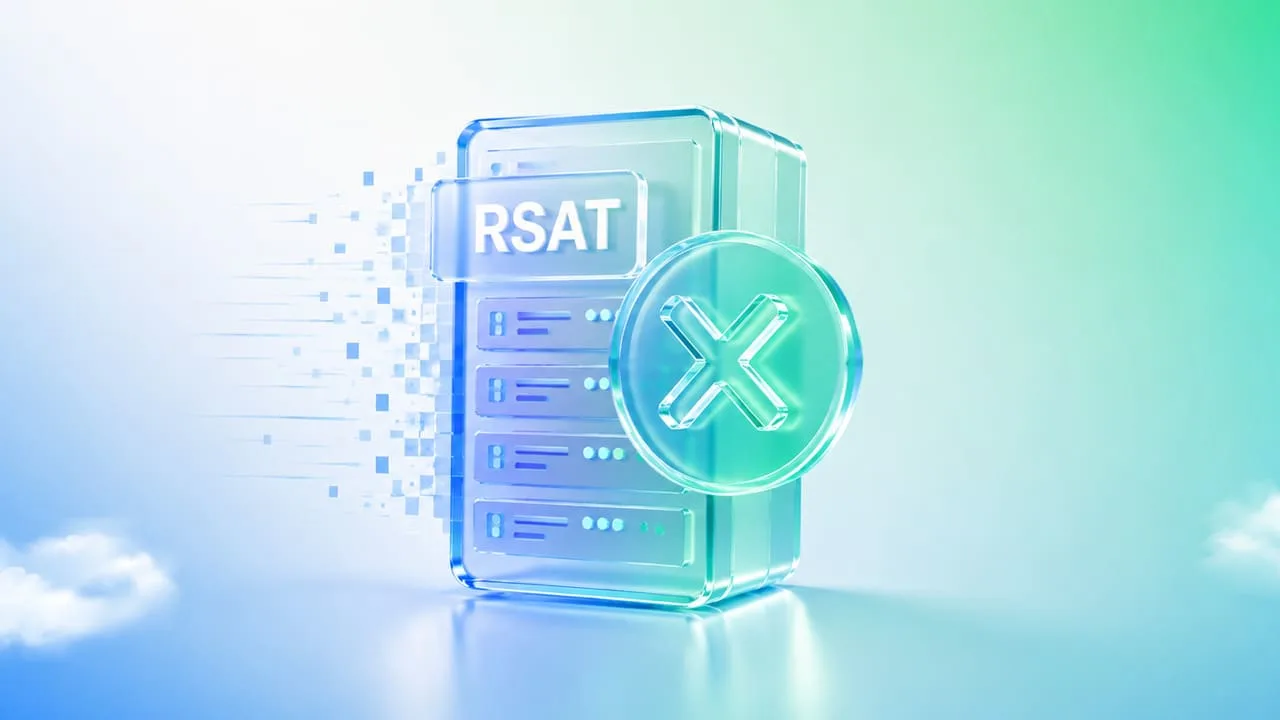
RSAT Deprecation 2027: The Full Timeline for Dynamics 365 F&O Teams

Microsoft has confirmed that the Regression Suite Automation Tool (RSAT) for Dynamics 365 Finance and Operations will not be supported after May 15, 2027. This is a deprecation, not an immediate shutdown.
- Existing installs keep running, but Microsoft stops shipping bug fixes, security patches, and feature updates, and there’s no guarantee RSAT stays compatible with future F&O release waves.
- RSAT was built for F&O regression testing only; it never covered Business Central, Sales, Customer Service, or Field Service, and it has no path for validating Copilot agent behavior.
- Teams with large RSAT libraries, or those under UAT compliance mandates, have roughly two years to plan a migration before support ends.
- The near-term action is: inventory your RSAT test suite now and start evaluating supported alternatives.
What’s Happening With RSAT (Quick Answer)
Microsoft has confirmed RSAT will not be supported after May 15, 2027. Existing installs keep running, but without bug fixes, security patches, or new features, leaving Dynamics 365 F&O teams responsible for anything that breaks.
As of August 2026, Microsoft has confirmed that the Regression Suite Automation Tool (RSAT) for Dynamics 365 Finance and Operations is marked for deprecation and won’t be supported after May 15, 2027.
RSAT will keep running past that date, but Microsoft will stop shipping bug fixes, security patches, and new features for it. Existing installs and test libraries continue to work, but without vendor support, and with no guarantee they’ll be compatible with future F&O release waves.
If your team relies on RSAT for user acceptance testing, you get roughly a year and a half from today to plan and execute a migration before the RSAT 2027 deadline hits. Here’s the work that needs to happen: auditing an existing test library, evaluating replacement tools, running a pilot, and cutting over without leaving a gap in UAT coverage.
What “End of Support” Means
As mentioned, RSAT won’t be supported after May 15, 2027. In practice, that will lead to a few concrete changes for any team still running it past that date:
- No security patches: Any vulnerability discovered in RSAT after May 2027 stays unpatched.
- No bug fixes or feature updates: The tool is frozen exactly as it stands on the deprecation date.
- No compatibility guarantees against future releases: Dynamics 365 F&O ships two major release waves a year, plus regular updates in between. RSAT has needed adjustment when these releases touch shared forms or fields. After May 2027, there’s no one on Microsoft’s side making sure it remains compatible with newer releases.
- LCS and Azure DevOps integration left as-is: RSAT’s workflow runs through Lifecycle Services and Azure DevOps for test authoring, execution, and reporting. Microsoft hasn’t published a plan to keep that integration current against future DevOps or LCS changes once RSAT stops receiving updates.
You can keep using RSAT after the deadline. But every issue that comes up, like a broken recording or a failed pipeline step, is on your team to solve alone. For a tool most teams use to prove financial and operational processes still work correctly, that’s a higher risk profile than running it today.
Why Microsoft Is Retiring RSAT
RSAT was built for a specific job: automating business-process regression tests inside Dynamics 365 Finance and Operations, using Task Recorder to convert manual clicks into repeatable test cases.
It’s primarily used for Dynamics 365 Finance and Operations testing and comes with F&O licensing. For years, RSAT has been the default way F&O teams handled UAT before an update or configuration change went to production.
That narrow scope is catching up with it. RSAT has never covered Dynamics 365 Sales, Customer Service, Field Service, or Business Central. Teams running those alongside F&O have always needed a separate testing approach.
Note
RSAT's coverage does extend slightly beyond core F&O. It also supports Cloud POS testing in Dynamics 365 Commerce, and can be used with the Warehouse App Task Validation Framework for warehouse processes. But that's still a narrow band next to the full D365 suite.
Microsoft is now pushing Copilot and AI agents deeper into Dynamics 365. These agents can post invoices, generate orders, and make judgment calls without a human having to click through the steps.
RSAT has no mechanism for validating this kind of non-deterministic behavior. It can only replay recorded clicks, not check whether an AI agent’s decision was the right one.
It can’t test Copilot agents. It replays fixed clicks, not judgment calls.
Essentially, it is being retired because what it was built to do is no longer covering everything a modern D365 environment needs to test.
Also, RSAT tests are built from Task Recorder sessions, which are recordings of a person clicking through a business process. When a release wave changes a form, moves a field, or alters a workflow, the recording no longer matches what’s on screen, and the test breaks.
Fixing it means re-recording everything. You can’t get by with just patching a line of configuration. The cycle is recurring: two release waves a year, each one needing tests to be reworked before they can be trusted again. That is consistent maintenance work, and the hours add up.
Every D365 update shouldn't cost you a testing cycle
Pre-built codeless assets modeled on Microsoft Dynamics business processes, aligned to Microsoft's release cadence. Regression that took days now finishes in hours.
See D365 Test Automation in ActionThe RSAT 2027 Deadline: Timeline and What to Do
This is the D365 F&O regression testing deadline. If you’re running RSAT, put these in your roadmap:
| Window | What’s True | To Do |
|---|---|---|
| Now (through mid-2027) |
RSAT fully supported, receiving updates as normal | Inventory your RSAT test library. Flag which tests cover F&O only vs. processes that touch Sales, Customer Service, Field Service, or Business Central. Start evaluating alternatives in parallel. |
| May 15, 2027 | Support officially ends | Cutoff for bug fixes, security patches, and new features. Tests still run. |
| Post–May 2027 | RSAT keeps running, unsupported | No new fixes, no compatibility guarantees against future release waves, LCS/Azure DevOps integration left as-is. Any breakage is yours to resolve. |
For teams with large libraries, migration realistically takes months. Teams will have to re-map test coverage, validate a new tool against their release cadence, and run both systems in parallel long enough to trust the new one.
Which Dynamics 365 Teams Does the RSAT Deprecation Affect?
Here are the teams that need extra attention to the RSAT deprecation deadline:
- F&O regression testers running UAT cycles against every release wave and hotfix.
- Teams with large RSAT libraries. The bigger the library, the longer a migration takes, and the more chances of running unsupported tooling if the move starts late.
- Teams under UAT compliance mandates. In these cases, documented, auditable testing before production changes isn’t optional. Running that process on unsupported software causes governance issues.
- Teams already running Dynamics 365 Sales, Customer Service, Field Service, or Business Central alongside F&O. You have likely already hit RSAT’s module-coverage ceiling and are testing those apps some other way.
Most enterprise Dynamics 365 environments touch at least one of the four points above, which is why this deadline has been showing up on QA and ERP roadmaps.
If you’re scoping what a broader Dynamics 365 testing approach looks like, this article on testing Dynamics 365 with ACCELQ walks through covering F&O alongside the rest of the D365 suite.
FAQ's
Is Microsoft retiring the Regression Suite Automation Tool?
Yes. Microsoft has confirmed RSAT is marked for deprecation, with support ending May 15, 2027.
When does RSAT support end?
May 15, 2027. After that date, Microsoft stops providing bug fixes, security patches, and feature updates for RSAT.
What happens to RSAT after May 2027?
RSAT keeps running after May 2027. Existing installs and test libraries don't stop working. But they run without Microsoft support, security patches, or any guarantee of compatibility with future Dynamics 365 release waves.
Can RSAT test Copilot agents?
No. RSAT works by replaying recorded UI actions against expected outcomes, ideal for deterministic business processes. It cannot validate Copilot or AI agent behavior, where the agent makes a judgment call rather than following a fixed click path.
What should D365 teams do before the RSAT deadline?
Start by inventorying your current RSAT test library. Separate F&O-only coverage from anything touching other Dynamics 365 apps. Finally, start evaluating supported alternatives well before 2027 because large libraries often take months to migrate.



Balbodh Jha
Associate Director Product Engineering
Balbodh is a passionate enthusiast of Test Automation, constantly seeking opportunities to tackle real-world challenges in this field. He possesses an insatiable curiosity for engaging in discussions on testing-related topics and crafting solutions to address them. He has a wealth of experience in establishing Test Centers of Excellence (TCoE) for a diverse range of clients he has collaborated with.


You Might Also Like:
 Selenium vs OATS vs ACCELQ for Oracle
Selenium vs OATS vs ACCELQ for Oracle
 How AI-Powered Automation Speeds Up Salesforce Delivery?
How AI-Powered Automation Speeds Up Salesforce Delivery?
 Your Guide to Salesforce DevOps Center Automation & Testing