








Open Source vs Commercial Test Automation: Which Strategy Will Lead in 2026?

Let’s be honest, test automation has become complicated.
There are more frameworks, AI-powered promises, and no-code tools than anyone can count. Everyone is selling speed, efficiency, and “intelligence.”
But one question still divides QA teams: should you go open source or commercial?
The debate around open source vs commercial test automation has been running for years, and in 2026, it’s more relevant than ever. Open source gives you flexibility and control. Commercial platforms offer scalability, built-in AI, and enterprise-grade support.
Here’s the thing: both can work. The right choice depends on your product, your process, and your people.
Let’s break down how these two approaches differ, what they each bring to the table, and where they’re heading next.
The Reality of the Testing Stack
If you’ve been around QA for a while, you’ve seen the shift.
Ten years ago, open source was the underdog. Today, it powers a huge portion of enterprise automation.
Commercial tools, meanwhile, have evolved from bulky enterprise software into sleek, AI-enabled platforms that plug right into CI/CD pipelines.
But the line between them isn’t as clear anymore.
You now have:
- Fully free frameworks like Playwright or Selenium that run half the world’s testing.
- “Freemium” options that mix open source with paid cloud hosting or advanced add-ons.
- SaaS platforms like ACCELQ, designed to manage everything in one connected ecosystem.
- Hybrid tools with free engines and paid enterprise modules.
So, the difference between open source and commercial testing tools isn’t just about cost anymore. It’s about control, ownership, and time.
That’s why the open source vs commercial test automation debate is still so relevant in modern QA.
Why Does Open Source Still Have Such a Strong Following?
Open source has always been popular because it gives you ownership. You can see the code, change it, improve it, and share it. You’re not tied to anyone’s roadmap or license.
Let’s call out where it shines:
1. Control and transparency
You know exactly what’s going on under the hood. No black boxes or hidden pricing. If something breaks, you can dig in and fix it.
2. Flexibility
Every company’s tech stack is different. Open source bends with you. Need to test an outdated web service or a custom API? You can.
3. Freedom from lock-in
You can switch frameworks whenever you want. No contract renewals, no vendor dependencies.
4. Community strength
When you get stuck, chances are someone else solved it already. Open source thrives on collaboration, and updates move fast because contributors keep it alive.
If your team loves tinkering, learning, and full transparency, open source will feel natural. It’s yours to shape.
The Flip Side of That Freedom
Of course, freedom comes with effort. In open source vs commercial test automation – Open source tools require maintenance and time.
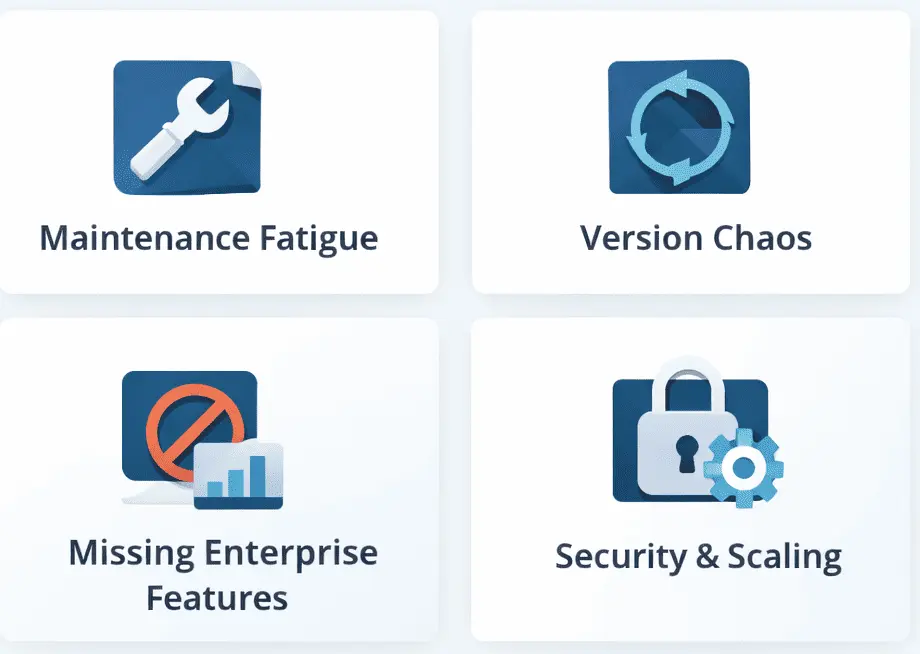
1. Maintenance fatigue
When something breaks, you’re on your own. No vendor support desk, just you, documentation, and community threads.
2. Version chaos
Dependencies change constantly. One update can break a plugin or cause pipeline failures.
3. Missing enterprise features
Analytics, dashboards, and compliance are often missing or scattered across add-ons. You’ll end up piecing them together.
4. Security and scaling
Managing multiple environments and patches takes real infrastructure work. For small teams, that overhead can quickly outweigh the savings.
That’s why many organizations admit that open source vs commercial testing software is not just a financial decision, it’s about the time and people you have to maintain it.
When teams discuss the pros and cons of open source vs commercial automation, this is what they mean. Open source saves money but consumes hours. Commercial tools cost more upfront but save long-term effort.
SUGGESTED READ - Key fundamentals of software testing
Why Commercial Tools Still Win Over Enterprises?
Commercial platforms dominate where stability matters more than flexibility. They give QA leaders peace of mind and consistency.
1. Real support
When something fails, you get dedicated help, not just community replies. This reliability is often worth the subscription alone.
2. Unified ecosystem
No need to combine five tools for execution, reporting, and analytics. Everything is already connected.
3. Built to scale
Commercial systems are designed for enterprise workloads. Running thousands of tests across cloud grids is just another Tuesday.
4. Accessibility
Not everyone on your team can code. With visual workflows, natural-language test authoring, and AI-driven test creation, non-technical users can contribute easily.
That’s what gives commercial testing software an edge. You’re not just buying automation, you’re buying reliability and accountability.
🚀What if one platform handled your entire QA workflow? → ACCELQ Unified
The Catch with Commercial Software
Of course, commercial platforms have their own trade-offs.
You now have:
- Cost: Licenses can add up fast, especially for growing teams.
- Limited customization: Vendors control the product roadmap. You can’t modify deep internals or fix something independently.
- Vendor dependency: Once your data and processes live inside a commercial system, switching becomes difficult.
- Slower innovation: Commercial vendors prioritize stability, which can slow down new features compared to open-source communities.
This is why many companies carefully weigh open source vs paid automation tools before going all-in. The right path depends on whether you value predictability or flexibility more.
And increasingly, some teams are asking a better question: why not use both?
The Rise of the Hybrid Model
Here’s where modern QA teams are heading. They’re blending open source frameworks with commercial layers instead of choosing sides.
You might see:
- ACCELQ can integrate with open-source test management tools and CI/CD tools.
- Open-source frameworks running in-house with cloud-based dashboards for analytics.
- Open-core models offering free access for developers and paid extensions for large-scale governance.
It’s the best of both worlds.
Plugins, APIs, and SDKs are making it easier to bridge ecosystems. The result is flexibility without chaos.
What’s even more interesting is how this hybrid mindset is reshaping QA culture.
Testers are becoming tool builders. They choose open source components for creativity and add commercial tools for structure. It’s creating what many now call a “plug-and-play QA culture,” where teams customize automation stacks like developers assemble applications.
Instead of asking which tool best, modern QA teams is asking which combination brings faster feedback and less maintenance.
That’s the new reality of open source vs commercial automation – not competition, but collaboration.
Choosing What Fits
There isn’t one right answer. The right choice depends on your priorities, team size, and growth plans.
Here’s a quick way to think about it:
| Criteria | Open Source | Commercial |
|---|---|---|
| Budget | Free, but labor-intensive | Paid, but predictable |
| Setup Time | Slower, manual | Fast, ready out of the box |
| Support | Community-driven | Vendor-backed |
| Compliance | Manual setup | Built-in governance |
| Customization | Unlimited | Restricted to vendor APIs or user extensions |
| Scalability | Depends on skill and infra | Seamless and managed |
| ROI of Commercial Test Automation | Harder to track | Easier to measure |
If you’re scaling fast or need compliance and uptime guarantees, commercial tools are the safer bet.
In simple terms, it’s a trade-off between autonomy and convenience.
And that’s exactly why the smartest QA teams are now experimenting with both.
What’s Next for 2026 and Beyond?
AI is changing everything, and both open source and commercial platforms are adapting.
AI in commercial tools
Platforms like ACCELQ Autopilot are using large language models to generate, maintain, and even prioritize tests automatically. QA is becoming predictive rather than reactive.
AI in open source
The Playwright and Cypress communities are already exploring AI-driven plugins and test-suggestion engines. Expect to see more shared, community-built AI models tailored for specific use cases.
Pricing evolution
Vendors are moving to usage-based billing, making enterprise automation tools more accessible for small teams.
Collaboration over competition
The old battle between open and closed ecosystems is fading. Open source and commercial platforms now share APIs, SDKs, and even integrations. It’s no longer a rivalry, it’s a partnership that benefits both sides.
The future of open source vs commercial testing software is one of convergence, not separation.
So, Which One Wins?
If you came looking for a winner, there isn’t one.
You might see:
- Open source will always lead in innovation, creativity, and community. Commercial test automation will continue to dominate in scalability, reliability, and enterprise governance.
- The real winners are the QA teams that use both. They combine open source frameworks for flexibility with commercial solutions for visibility and AI support.
- If you’re choosing a strategy for 2026, don’t pick sides. Build a stack that evolves with your business.
That’s what modern QA is really about, adaptability, not allegiance.
Final takeaway:
Whether you’re comparing open source vs commercial testing tools or blending both, the key is flexibility. The future of automation lies not in choosing one camp but in integrating the strengths of each into a system that works for your team.



Balbodh Jha
Associate Director Product Engineering
Balbodh is a passionate enthusiast of Test Automation, constantly seeking opportunities to tackle real-world challenges in this field. He possesses an insatiable curiosity for engaging in discussions on testing-related topics and crafting solutions to address them. He has a wealth of experience in establishing Test Centers of Excellence (TCoE) for a diverse range of clients he has collaborated with.

You Might Also Like:
 Accessibility Testing with ACCELQ
Accessibility Testing with ACCELQ
 What is Unit Testing? Best Practices to Do it Right
What is Unit Testing? Best Practices to Do it Right
 What is Usability Testing? [Tester’s Beginners Guide]