








API’s are the backbone of today’s digital eco-system. API’s are no longer limited to just integrating applications, they host the most critical components of business in modern application architecture. API testing, unfortunately, has not matured relative to the critical importance of API’s.
All the tools and processes around API testing are white-box testing driven, developer-oriented and limit their automation to request-response automation.
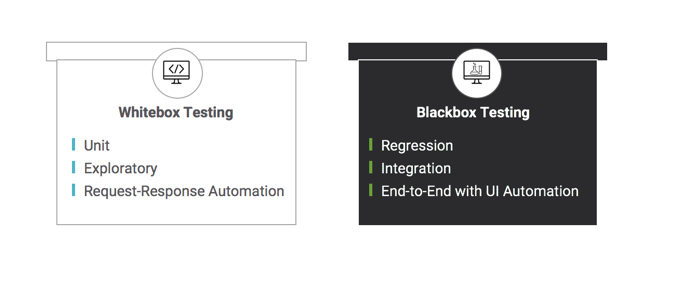
Limiting to white-box testing used to be ok for API validations when they were just limited to providing integrations between applications. API’s now are a more critical part of end-to-end business flow and hosting complex rules and logic, more so with microservices, etc.
API validations need to have some level of maturity as functional black-box testing with full-blown regressions and integrated end-to-end validations across UI and APIs.
3 steps to make this happen:
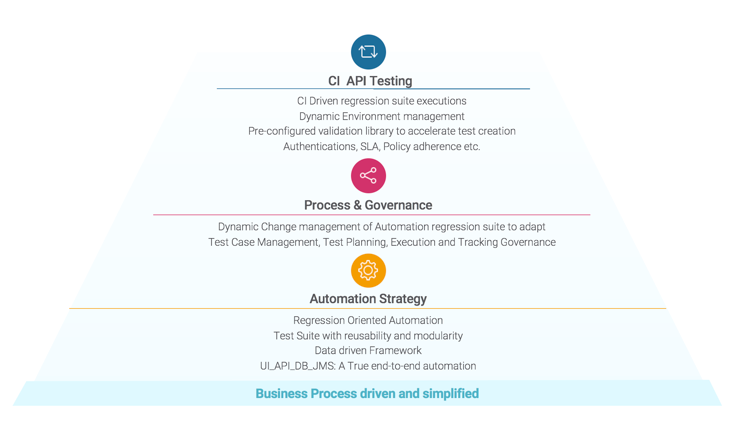
1. API Automation strategy
The notion of API automation should be a lot more than just automating request-response and its validations. Regression oriented API automation means having a modular and reusable driven API test suite. API test suite that can assure coverage not just from data values, but also from business processes it touches. Automated validations that go across technology boundaries to validate end to end flow from UI to various API calls.
2. API Test governance
Once there is automation strategy and maturity achieved, its all the more important that changes don’t drag you down. So often we see automation failing to provide the ROI because of the effort changes and maintenance it takes. With API testing, its all the more critical to have a sound framework in place to handle changes with minimal effort, and being able to define regression suites to business validation needs and test with maximum coverage.
2. Continuous API Testing
API testing can particularly be more aligned to continuous testing with flexibility to execute faster. Apart from bringing the automated executions with CI tools, API testing maturity and automation should be improved by a pre-configured validation library to test common industry-standard policies for both standard services and micro-services.
I am sure all this sounds good, and you are probably considering or already implemented it in parts. What if I tell you that there is a simpler way to get this accomplished. A simpler way that’s free of custom frameworks, free of programming and technical complexities, and completely aligned to business process.
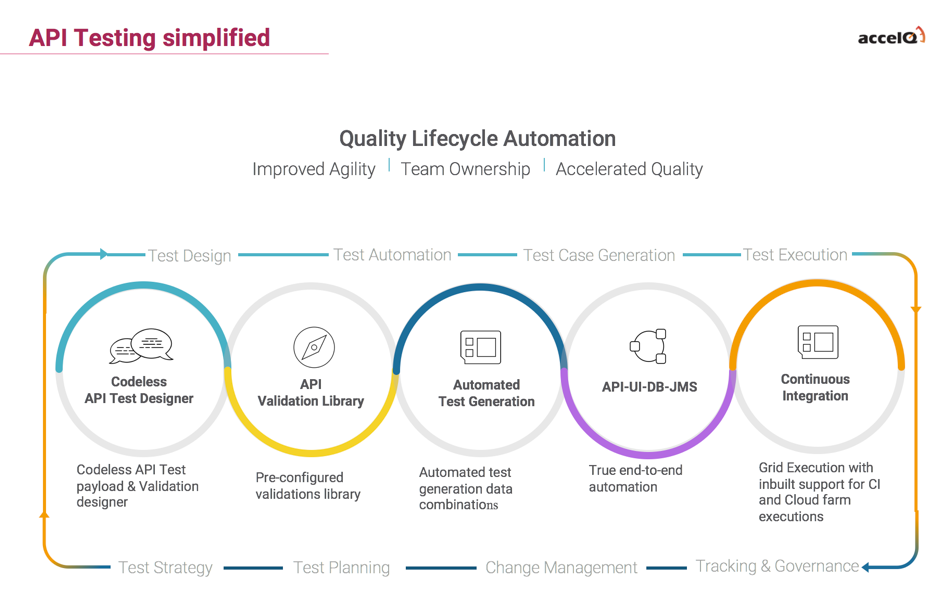
accelQ simplifies API testing with codeless natural language automation to achieve regression maturity for a true end-to-end validation.

GULJEET NAGPAUL
Chief Product Officer, ACCELQ


This Might Also Interest You...
 Testing Strategies for Workday
Testing Strategies for Workday
 See How ACCELQ Makes In-Sprint Test Automation Possible?
See How ACCELQ Makes In-Sprint Test Automation Possible?
 Test case change management in ACCELQ